The Essential Guide to Kitten Vaccinations: Schedule, Safety, and Where to Get Shots Near You
April 28, 2026
Key Takeaways
•Kittens may be susceptible to infection as early as 4–5 weeks of age, when maternal antibodies begin to decline, though it varies between kittens. A multi-dose vaccine series is essential for developing immunity and protective antibodies.
•Even strictly indoor kittens require core vaccinations — and may actually be more susceptible to some diseases than outdoor cats, as they miss the natural immune boosting that comes from casual environmental exposure.
•Up to one-third of kittens may fail to respond to a core vaccine at 16 weeks of age because maternal antibodies can persist to 20 weeks. A booster at 6 months of age is now recommended to help maintain protection.
•Vaccine dosage is not based on body weight. A 2-pound kitten requires the same dose as a 15-pound cat. Splitting or reducing doses typically results in complete failure to immunize.
•Adverse vaccine reactions occur in approximately 0.52% of cats.
Introduction: Why Your Kitten’s First Vet Visit Is Their Most Important
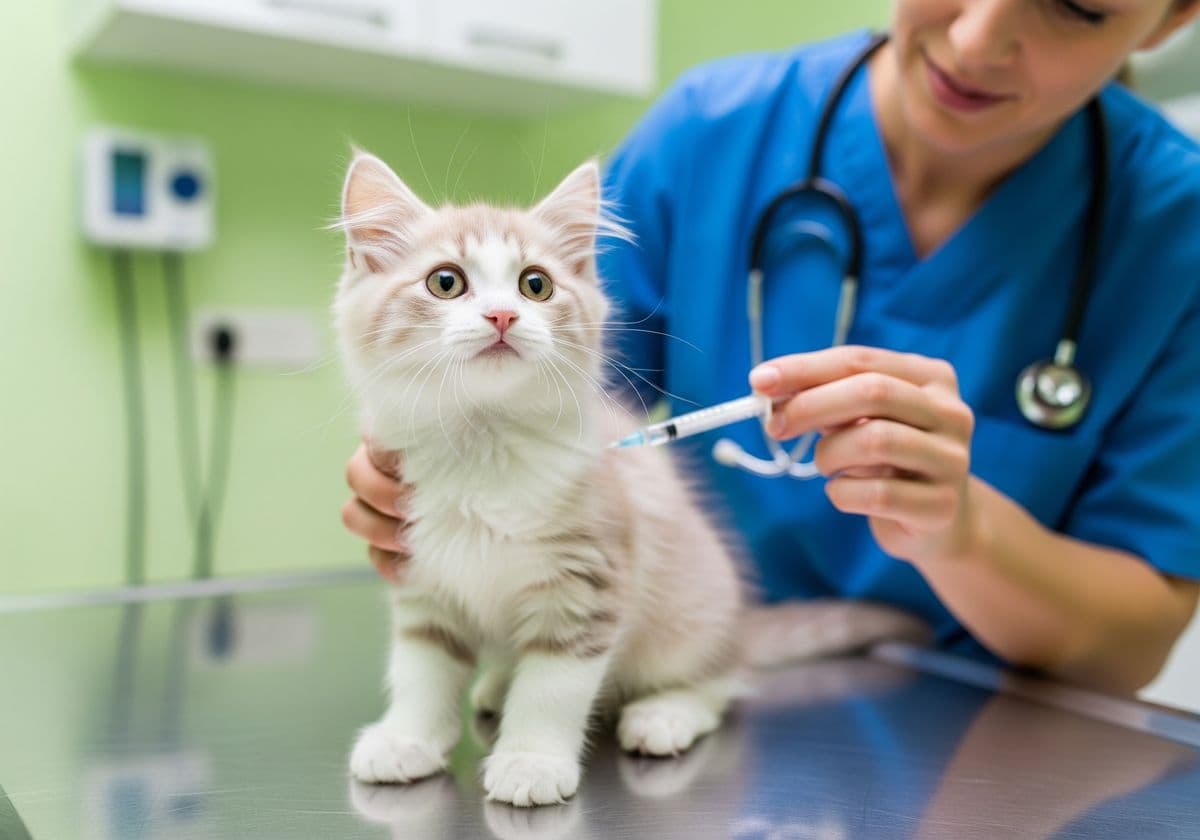
Bringing a new kitten home is a major milestone, filled with late-night zoomies and the start of a lifelong bond. Amidst the excitement of picking out the perfect scratching post, your first priority should be establishing a solid vaccination plan. The kitten vaccine schedule typically begins at 6 to 8 weeks of age, with the first vaccines being the FVRCP vaccine (also known as the distemper shot) and a series of core vaccinations. While it might feel like a lot to ask of such a tiny animal, vaccines are the single most effective way to prevent life-threatening infectious diseases before they have a chance to take hold.
Because kittens have immature immune systems, they are uniquely vulnerable to pathogens that an adult cat’s body might easily manage. Think of vaccines as the essential “starter kit” for your kitten’s long-term health. In kittens, infectious diseases are more prevalent than in adults, and kittens younger than 6 months old are particularly susceptible — representing the primary target population for immunization. (Stone et al., 2020)
Why Kitten Vaccinations Are Non-Negotiable
Vaccines work by mimicking an infection, training the kitten’s immune system to recognize and neutralize specific viruses or bacteria. Without this “training,” a kitten’s first encounter with a disease like Panleukopenia can be fatal within days. Vaccines stimulate the kitten's immune system to produce protective antibodies, leading to active immunity after passive immunity from maternal antibodies wanes.
How Maternal Immunity Works - and Why It Runs Out
Kittens born to immune queens do not acquire antibodies through the placenta. Instead, they absorb specific maternally derived antibodies (MDA) through the mother’s first milk (colostrum) — with most absorption occurring within the first 24 hours of life. These antibodies provide critical early protection, known as passive immunity, during the first few weeks.
However, MDA also actively blocks vaccines from working: the antibodies neutralize vaccine antigens and prevent the kitten’s own immune system from responding. Research shows that MDA begins declining in the first weeks of life, with serum antibodies at their lowest around 3–4 weeks of age and then rising again at 5–7 weeks — suggesting kittens may become susceptible to infectious diseases as early as 1 month of age. (Stone et al., 2020)
The critical challenge: the exact point at which any individual kitten’s MDA has declined enough for a vaccine to “take” cannot be predicted without blood testing, and varies significantly between individual kittens and between litters. Some kittens maintain high MDA concentrations for months. This is the most common reason for vaccine failure. ()
Frequently asked questions
Why does my kitten need multiple doses of the same vaccine?
Because maternal antibodies (MDA) in the kitten’s bloodstream block vaccines from working, and the exact timing of when MDA declines enough in any individual kitten cannot be predicted without blood testing. The series is given every three to four weeks to ensure at least one dose lands after MDA has waned and to help develop longer lasting active immunity. Giving doses less than 2 weeks apart can actually interfere with immunization. (Stone et al., 2020)
My kitten just finished the series at 16 weeks. Are we done?
Not quite. Up to one-third of kittens may fail to respond to the 16-week vaccine because MDA can persist until 20 weeks. The current guidelines therefore recommend an additional fvrcp booster against FPV, FHV-1, and FCV at 6 months of age to maintain protection. Your veterinarian will also schedule annual FeLV and rabies vaccines at that visit. (Stone et al., 2020)
Do indoor-only kittens really need vaccines?
Yes. Indoor kittens need core vaccinations to protect against highly contagious diseases and severe illness, as viruses can be transmitted indirectly. Indoor cats can be exposed to pathogens at the veterinary clinic, through new cats entering the household, or via viruses carried in on clothing and shoes. Counterintuitively, indoor cats may be more susceptible to some diseases than outdoor cats because they lack the natural immune boosting that comes from casual environmental exposure. Rabies vaccination is also legally required in most regions regardless of indoor status. (Stone et al., 2020)
What should I watch for after my kitten receives their shots?
Most kittens experience only mild lethargy, reduced appetite, or local tenderness for up to three days. In the largest feline vaccine safety study to date (nearly 500,000 cats), the adverse reaction rate was 0.52% within 30 days. (Moore et al., 2007) Moderate side effects can include vomiting, diarrhea, and loss of appetite, while severe reactions may involve facial swelling, hives, trouble breathing, or shock. Contact your veterinarian immediately or bring your kitten to an emergency hospital if severe reactions occur. Also monitor the injection site using the 3-2-1 rule: seek evaluation for any lump that persists 3 months, exceeds 2 cm, or grows within 1 month of vaccination.
Citations
Day MJ, et al. WSAVA Guidelines for the vaccination of dogs and cats. Journal of Small Animal Practice. 2016.
Moore GE, et al. Adverse events after vaccine administration in cats: 2,560 cases (2002–2005). Journal of the American Veterinary Medical Association. 2007.
Stone AE, et al. 2020 AAHA/AAFP Feline Vaccination Guidelines. Journal of the American Animal Hospital Association. 2020.
The information on this website is for educational purposes only and does not constitute veterinary medical advice, diagnosis, or treatment. Always consult a licensed veterinarian regarding your pet's health. Reliance on any information provided by Vetmodo is solely at your own risk.
Why a Series of Vaccines Is Required - Not Just One
Because MDA timing is unpredictable, shots kittens receive are given as a series every three to four weeks, with the final dose at 16 weeks of age or later. This maximizes the chance that at least one dose lands after MDA has declined sufficiently to allow the kitten’s immune system to respond and develop longer lasting active immunity. The series should not be started before 4 weeks of age — very young neonates are more susceptible to vaccine organism-associated disease and may not respond well. (Stone et al., 2020)
There is also an important timing caution: intervals of less than 2 weeks between doses can interfere with successful immunization, particularly with modified live vaccines. Shorter intervals are not better — each dose needs time to allow a proper immune response before the next.
The 6-Month Booster: A Critical Update
A particularly important update from current guidelines: up to one-third of kittens may fail to respond to their final core vaccine at 16-18 weeks of age because MDA can persist and remain blocking until 20 weeks of age. To close this gap, the guidelines recommend an additional FVRCP booster against FPV, FHV-1, and FCV at 6 months of age. This is a separate visit from the core kitten series and is distinct from the annual FeLV and rabies vaccinations. (Stone et al., 2020)
Additionally, once vaccination has been successfully achieved, a booster 3–4 weeks after the last dose of the initial series is particularly important for inactivated (killed) vaccines, which produce weaker immune responses than modified live vaccines and require two initial doses to build adequate protection. Full protection may not develop until 2–3 weeks after the final dose of an inactivated vaccine series. (Stone et al., 2020)
The 2020 AAHA/AAFP Feline Vaccination Guidelines: Core and Non-Core Vaccines
The American Animal Hospital Association (AAHA) and the American Association of Feline Practitioners (AAFP) categorize feline vaccines into Core and Non-Core based on disease severity, transmissibility, and risk to public health. The guidelines emphasize that no single vaccination protocol is appropriate for every cat — recommendations are individualized based on life stage, kitten's lifestyle, and risk assessment. (Stone et al., 2020)
Core Vaccines — Recommended for All Kittens
The following vaccines are recommended for every kitten, regardless of lifestyle or living situation:
Feline Panleukopenia (FPV): A highly contagious parvovirus attacking the intestines and bone marrow, with a high fatality rate in unvaccinated kittens. FPV vaccines are among the most effective in veterinary medicine — cats that respond to vaccination with modified live virus (MLV) can maintain solid immunity for many years. A single dose of MLV FPV vaccine can provide partial immunity within hours in the absence of MDA. (Stone et al., 2020)
Feline Herpesvirus-1 (FHV-1) and Feline Calicivirus (FCV): The primary causes of severe upper respiratory infections, typically given together with FPV as the FVRCP combination vaccine (also called the distemper shot). The FVRCP vaccine is a core vaccination that protects against highly contagious diseases. Note: vaccination against FHV-1 and FCV does not provide sterilizing immunity. Vaccinated cats may still become infected, but vaccination dramatically reduces the severity of illness and the likelihood of death. (Stone et al., 2020)
Rabies: A fatal zoonotic viral disease transmissible to humans, legally required in most US regions. Kittens usually receive their first rabies vaccine around 12 to 16 weeks of age, with a booster shot one year later, and then every one to three years thereafter, depending on local laws and vaccine type. Rabies vaccination is particularly important because an unvaccinated cat that bites a person or is exposed to a wild animal may be required by law to be quarantined or euthanized. (Stone et al., 2020)
Feline Leukemia Virus (FeLV): Core for all cats younger than 1 year old, when immune-systems are most susceptible to persistent infection. After one year of age, FeLV vaccination becomes a non-core, lifestyle-dependent decision. Adult cats develop some age-related resistance to FeLV infection, making vaccination less critical unless they have outdoor access, live with infected cats, or are at high risk. (Stone et al., 2020)
Non-Core Vaccines — Lifestyle Dependent
Non-core and optional vaccines are for kittens with specific lifestyle risk factors, such as high risk environments or exposure to infected cats. These include the felv vaccine (for older cats), Bordetella bronchiseptica, Chlamydia felis, and feline immunodeficiency virus (FIV), typically recommended for kittens in shelters, boarding facilities, or breeding catteries with elevated transmission risk or exposure risk. The FIP (feline infectious peritonitis) vaccine is listed as generally not recommended by the guidelines due to insufficient evidence of clinically relevant protection. (Stone et al., 2020)
Do Indoor-Only Kittens Really Need Vaccines?
This is one of the most common questions veterinarians hear. The answer is unambiguously yes, and for a reason that surprises many owners.
Even indoor kittens need core vaccinations to protect against potentially fatal diseases and severe illness, as viruses like feline herpes virus and panleukopenia can be transmitted indirectly through open windows, clothing, or other means. Pathogens like Panleukopenia are extraordinarily hardy in the environment.
There’s also a counterintuitive risk: the guidelines note that strictly indoor cats may actually be more susceptible to some infectious diseases than outdoor cats because they don’t receive “natural immune boosting” that occurs when outdoor cats have casual, subclinical exposure to circulating pathogens in the environment. (Stone et al., 2020)
Additionally, rabies vaccination is legally required in most US states regardless of indoor/outdoor status, because of its risk to humans. If an unvaccinated cat bites a person, legal consequences can include mandatory quarantine or euthanasia.
Where to Get Kitten Vaccinations Near You: Comparing Your Options
The guidelines emphasize that vaccination should always include a thorough physical examination and a discussion between you and your veterinarian about your specific kitten’s lifestyle and risks. There are several ways to ensure your kitten is protected, depending on your needs and budget:
General Practice Veterinarians
The gold standard. A comprehensive physical examination alongside vaccination, a permanent medical record, and a veterinarian who will develop a relationship with your kitten over time. The vaccination visit is explicitly recognized in the guidelines as an ideal opportunity to discuss overall preventive healthcare - not just injections. (Stone et al., 2020)
Best for: Families seeking an individualized vaccination plan and a long-term relationship with a veterinarian.
Offered at pet stores or community centers. Lower cost and convenient for boosters, but typically without a comprehensive physical exam.
Best for: Keeping boosters current when a full appointment isn’t needed.
Shelters and Non-Profit Organizations
Many animal shelters offer low-cost preventive care services, including kitten vaccines, to help protect your kitten and support your cat's health. An excellent affordable option focused on community health.
Best for: Pet owners prioritizing affordability without compromising on essential protection.
High-standard protocols and access to specialists, though many will have their own General Practice/Primary Care departments focused on preventative health and wellness. Appointments may take longer due to the teaching environment.
Best for: Kittens with complex health needs or owners wanting access to cutting-edge protocols.
⚠️ A note on at-home and breeder-administered vaccines Vaccines require strict cold-chain storage to maintain efficacy — improper handling or breaks in refrigeration can render a vaccine ineffective without any visible sign that this has occurred. For this reason, vaccination should only be performed under the supervision of a licensed veterinarian. Vaccines purchased online or administered by a breeder carry a real risk of undetected cold-chain failure, meaning your kitten may appear vaccinated but remain entirely unprotected.
Is My Kitten Too Small for a Full Vaccine Dose? Addressing Safety Concerns
The Dosage Myth: Why Weight Doesn’t Determine Vaccine Dose
Unlike antibiotics or pain medications, vaccine dosage is not based on body weight. A vaccine contains the minimum amount of antigen required to trigger an immune response. Whether a cat weighs 2 pounds or 15 pounds, they require the same dose. (Day et al., 2016) Splitting or reducing doses typically results in complete failure to immunize - the kitten receives an injection but remains entirely unprotected.
What the Data Actually Shows About Vaccine Reactions
Modern feline vaccines have an excellent safety record. In the largest study to date covering nearly 500,000 cats with more than 1.25 million vaccine doses administered, adverse reactions within 30 days were reported in 0.52% of vaccinated cats. (Moore et al., 2007)
The most commonly reported reactions were lethargy, reduced appetite, and mild fever for a few days after vaccination, or local inflammation at the injection site. Two facts that tend to surprise owners:
Risk of a reaction was greatest in cats around 1 year of age, not in small young kittens as most owners assume.
Risk increased with the number of vaccines given at the same visit. Your veterinarian may choose to stagger vaccines across visits to minimize this.
Moderate side effects from kitten vaccinations can include vomiting, diarrhea, and loss of appetite, while severe reactions may involve facial swelling, hives, trouble breathing, or shock. (Stone et al., 2020) If severe side effects occur after vaccination, it is crucial to bring your kitten to an emergency veterinary hospital immediately or contact your veterinarian immediately.
Serious anaphylaxis is rare, occurring in approximately 1–5 per 10,000 vaccinations, and may manifest as vomiting, diarrhea, respiratory distress, facial swelling, or collapse. If revaccination is necessary in a cat that has previously reacted, using a different vaccine formulation and premedicating with an antihistamine 20–30 minutes beforehand can be considered (though weight the pros and cons of the vaccine).
⚠ Signs that warrant contacting your vet after vaccination
Contact your veterinarian immediately if you notice: facial or body swelling, hives or generalized itchiness, vomiting or diarrhea, difficulty breathing, collapse, complete loss of appetite lasting more than 48 hours, or any rapid worsening of your kitten’s condition. Most kittens are back to their normal, high-energy selves within 24 hours.
Injection-Site Sarcomas: What to Watch For
Feline injection-site sarcomas (FISS) are rare but serious tumors that can develop at vaccine injection sites. They have been recognized since 1991. The 2020 AAHA/AAFP guidelines recommend the “3-2-1 rule” for monitoring after vaccination: seek a veterinary evaluation and biopsy for any lump or swelling that:
Is still present 3 months after vaccination
Is larger than 2 cm in diameter
Is increasing in size 1 month after vaccination
To reduce sarcoma risk and facilitate surgical treatment if one does develop, vaccines are now recommended in the distal limbs rather than the interscapular space (between the shoulder blades). This allows clean surgical margins if removal is needed. Canarypox-vectored (non-adjuvanted) vaccines have also been associated with a reduced sarcoma risk compared to adjuvanted inactivated vaccines. (Stone et al., 2020)
Understanding the Risk-Benefit Ratio
The risk of a kitten dying from a preventable disease like Panleukopenia far outweighs the statistically small risk of a vaccine reaction. The guidelines are explicit: vaccination is not a guarantee of protection, but it dramatically reduces the risk and severity of disease. By following the recommended kitten vaccine schedule, you’re giving your kitten the best available biological defense against diseases that can be fatal within days and supporting your kitten's care and cat's health.
Navigating the first few months of kitten ownership can feel overwhelming, but finding quality medical care doesn’t have to be.Vetmodo.com connects you with veterinary practices in your area that can develop the individualized, lifestyle-based vaccination plan your kitten needs. Whether you’re looking for a general practice veterinarian to establish a long-term medical record, or a lower-cost clinic for boosters, our platform lets you filter by service type and location.
Wellness/Preventative Care
Puppy Vaccine Guide: Schedule, Safety & Where to Go
Protecting your puppy from life-threatening diseases like Parvo and Distemper requires more than a single shot; it requires a strategic, guideline-based schedule. Learn why the "immunity gap" makes boosters essential, discover the difference between core and lifestyle vaccines, and find the safest place for your pup’s first appointment.