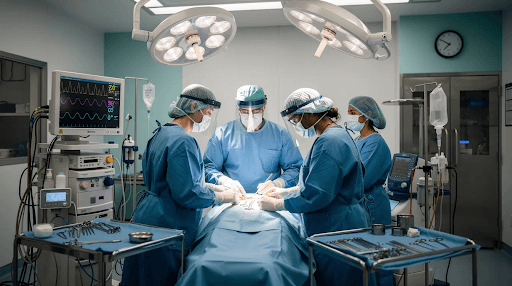
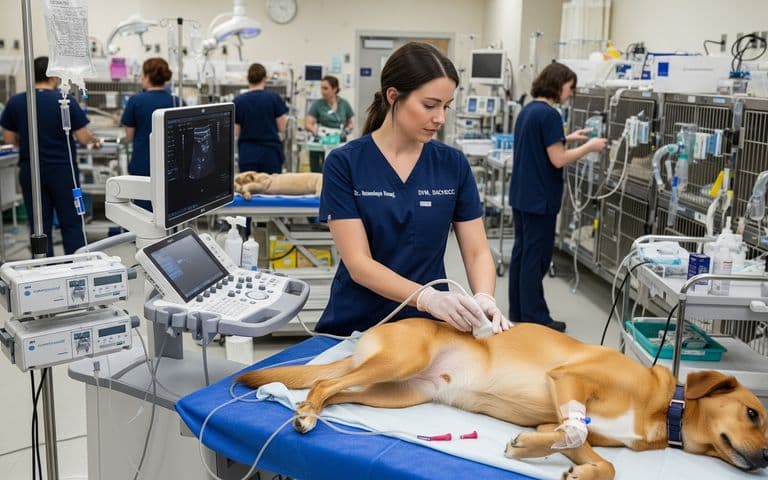
•The DACVS Gold Standard: A board-certified surgeon (Diplomate of the ACVS) completes 4+ years of rigorous post-graduate training beyond vet school. This "repetitive mastery" is essential for complex orthopedic, neurologic, and soft-tissue procedures that require a higher level of precision and specialized equipment than routine general practice can provide.
•Precision Through Technology: Specialists offer advanced, minimally invasive options like arthroscopy, laparoscopy, and thoracoscopy. These "keyhole" surgeries use cameras and tiny incisions to reduce postoperative pain and significantly speed up recovery times.
•When to Seek a Specialist: While primary vets handle routine spays and simple mass removals, a DACVS is necessary for high-stakes cases. This includes fracture repairs (broken bones), TPLO (ACL) repairs, spinal surgery for paralysis, and complex cancer resections where precise margins are critical for preventing recurrence and ensuring long-term survival.
•Multimodal Management: Not every referral leads to surgery. DACVS specialists are also experts in conservative, non-surgical management of chronic lameness, utilizing weight optimization, targeted physical rehab, and advanced pain management protocols.
•Collaborative Team Care: A specialist doesn’t replace your primary veterinarian; they act as a vital extension of the team. They focus on the surgery and immediate perioperative care, while your family vet manages your pet’s overall health history and coordinates the long-term recovery and rehabilitation plan.
Introduction: What a Veterinary Surgical Specialist Does for Your Pet
If your pet needs surgery, it’s natural to feel anxious. At Vetmodo, we help owners understand their options so they can make confident, informed decisions alongside their veterinary team.
A veterinary surgical specialist is a board certified surgeon who has earned the title Diplomate of the American College of Veterinary Surgeons, Small Animal (DACVS-SA). These surgeons focus exclusively on complex procedures in dogs and cats, including:
Orthopedic surgery like fracture repair or joint reconstruction.
Soft tissue surgery involving internal organs (liver, kidneys, etc.).
Neurologic interventions for complex spinal conditions.
Minimally invasive techniques using arthroscopy or laparoscopy.
Your family veterinarian handles routine procedures, such as spays, neuters, and simple mass removals, often with excellent care. However, when your pet faces a condition requiring advanced surgery, specialized equipment, or extensive surgical expertise, a DACVS surgeon becomes essential. Vetmodo supports this decision-making process by translating current research into practical guidance for both owners and primary care veterinarians.
What “Board-Certified Veterinary Surgeon (DACVS)” Really Means
When you see “DACVS” after a veterinarian’s name, it signals completion of rigorous, standardized specialty training and examination verified by the American College of Veterinary Surgeons.
The training path includes:
Four-year veterinary school degree (DVM, VMD, or foreign equivalent).
One-year internship in medicine and surgery.
Three-year residency program approved by the ACVS, requiring supervised surgical cases and original research publication.
Multi-day certifying examination to demonstrate mastery of the field.
The college of veterinary surgeons, founded in 1965, sets standards for both small animal surgery and large animal surgery across North America and increasingly worldwide. Only veterinarians who complete this pathway can legally use the title board certified veterinary surgeons. You can verify any surgeon’s credentials through the ACVS “Find a Surgeon” directory.
Be cautious of unregulated marketing terms like “surgical vet” or “advanced surgery specialist.” Unlike the protected designation board certified surgeon, these phrases carry no standardized meaning and may not indicate equivalent training including the extensive preparation DACVS surgeons complete.
Frequently asked questions
What is a DACVS, and why does my pet need one for surgery?
A DACVS is a Diplomate of the American College of Veterinary Surgeons. This board-certified specialist has completed a minimum of four years of advanced training (internship and residency) exclusively in surgical techniques after veterinary school. You should seek a DACVS for complex procedures, such as ACL (TPLO) repairs, spinal surgery for IVDD, or tumor removals, that require specialized equipment and a higher level of precision than routine general practice surgery (Simons et al., 2024).
What are the benefits of minimally invasive or "keyhole" surgery for pets?
Minimally invasive surgery, such as laparoscopy or thoracoscopy, utilizes tiny incisions and advanced camera technology to perform complex internal work. For the pet, this translates to significantly less post-operative pain, reduced risk of infection, and a much faster return to normal activity compared to traditional "open" surgical approaches (Stoneburner et al., 2024); (Gibson, 2024).
If I cannot afford a specialist, are there other options for my pet’s surgery?
When a referral to a specialty center is not financially feasible, your primary veterinarian may discuss a "spectrum of care" approach. This involves working with your local vet to implement modified surgical techniques or aggressive medical management. In some cases, your vet may even consult with a board-certified surgeon remotely to optimize the outcome within your specific budget (Sullivant et al., 2020).
Citations
ACVS: About the American College of Veterinary Surgeons. https://www.acvs.org/about/
Block G. Evidence-based veterinary medicine. J Vet Intern Med. 2024. https://pubmed.ncbi.nlm.nih.gov/39523636/
Burney D, et al. 2025 AAHA Referral Guidelines. J Am Anim Hosp Assoc. 2025. https://pubmed.ncbi.nlm.nih.gov/40009526/
Burrows CF. Meeting the expectations of referring veterinarians. J Vet Med Educ. 2008. https://pubmed.ncbi.nlm.nih.gov/18339951/
Forbes NA. Recognising veterinary specialists. Vet Rec. 2012. https://pubmed.ncbi.nlm.nih.gov/22427425/
Gibson EA. Augmenting Veterinary Minimally Invasive Surgery. Vet Clin North Am Small Anim Pract. 2024. https://pubmed.ncbi.nlm.nih.gov/38519369/
Simons MC, et al. Trained to cut? A literature review of veterinary surgical resident training. Vet Surg. 2024. https://pubmed.ncbi.nlm.nih.gov/38816998/
Stoneburner RM, et al. Laparoscopy and thoracoscopy in small animal surgery. Vet Surg. 2024. https://pubmed.ncbi.nlm.nih.gov/38877654/
Sullivant AM, et al. Strategies to Improve Case Outcome When Referral Is Not Affordable. J Vet Med Educ. 2020. https://pubmed.ncbi.nlm.nih.gov/31194628/
VE
Written by
Vetmodo Editorial Team
The information on this website is for educational purposes only and does not constitute veterinary medical advice, diagnosis, or treatment. Always consult a licensed veterinarian regarding your pet's health. Reliance on any information provided by Vetmodo is solely at your own risk.
How DACVS Surgeons Differ from General Practice Veterinarians
Your primary care veterinarians serve as the foundation of your pet’s health care, managing wellness exams, vaccinations, routine dentistry, and straightforward procedures. They expertly handle many conditions in-house when risk is lower.
DACVS surgeons limit their practice to surgery, anesthesia planning, and perioperative management. They routinely perform high-risk procedures that general practices encounter less frequently:
Tibial Plateau Leveling Osteotomy (TPLO) for cruciate tears. Other complex orthopedic surgeries are also performed
Fracture Repair internal and external fixation techniques for faster recovery
Minimally Invasive Surgery (MIS) for conditions that previously may have required open surgery
Liver Shunt (Portosystemic Shunt/PSS) correction for abnormal blood vessels affecting the liver
Thoracic Surgery that may be required for diseases affecting the lungs
Spinal decompressions for intervertebral disc disease (IVDD).
Complex cancer resections requiring precise surgical margins.
Surgical specialists typically operate in referral hospitals featuring dedicated surgical suites, advanced care protocols, and access to CT scanners, fluoroscopy for real-time imaging, and arthroscopy for joint exploration. You’ll notice larger teams, specialized caseloads, and equipment enabling procedures beyond typical clinic capabilities.
Importantly, DACVS surgeons collaborate with rather than replace your veterinarian. Your primary vet initiates the referral, shares medical history, and continues managing your pet’s overall health after surgical care concludes.
When Your Pet Should Be Referred to a Veterinary Surgical Specialist
Referrals typically come from your primary veterinarian, guided by AAHA Referral Guidelines. Common referral situations include:
Orthopedic problems: Cruciate ligament tears (ACL), chronic lameness, complex fractures, or hip and elbow dysplasia.
Cancer cases: Large or invasive tumors (mast cell tumors, soft tissue sarcomas) requiring reconstruction, or oral tumors
Neurologic conditions: IVDD causing paralysis or spinal instability.
Emergencies: Gastric dilatation-volvulus (bloat), hemoabdomen, or acute respiratory distress.
Congenital issues: Portosystemic shunts or severe patellar luxation.
Chronic or recurrent problems - long-standing lameness, repeatedly dislocating joints, non-healing wounds, or complications following previous surgery - warrant referral when general management has not achieved expected outcomes.
AAHA guidelines emphasize clear communication between the general practitioner, the specialist, and the owner. Vetmodo supports this shared decision-making, helping everyone understand the best possible outcome for their pet.
What to Expect at a Surgical Specialist Consultation
A DACVS consultation is typically more in-depth than a standard vet visit and may last up to 30-60 minutes, depending on the case.
Before your appointment, your family veterinarian sends referral records and imaging. You should prepare a list of current medications, supplements, and previous surgeries. Follow any fasting instructions and complete requested lab work prior to the appointment.
During the visit, a nurse reviews your pet’s history, then the surgeon performs a thorough physical, orthopedic, or neurologic examination. Previous imaging is assessed to determine whether additional diagnostics like CT or MRI are needed, or more up to date standard imaging (such as X-rays) are warranted. The surgeon will likely:
Explain the diagnosis in plain language.
Present surgical and non-surgical treatment options, with expected benefits and risks
Discuss the anesthesia plan and pain management protocols.
Post-operative hospitalization needs
Associated costs
Financial transparency matters. Expect written estimates covering surgical solutions and aftercare, comparisons between open and minimally invasive approaches when applicable, and discussion of alternatives if budget constraints limit options.
Minimally Invasive Veterinary Surgery: Arthroscopy, Laparoscopy, and Thoracoscopy
Minimally invasive surgery uses small “keyhole” incisions (often 5–10mm), cameras, and specialized instruments instead of large open approaches.
Common techniques include:
Arthroscopy: For joint evaluation and repair (elbow dysplasia/shoulder instability).
Laparoscopy: For abdominal procedures like spays/ovariectomy, liver biopsies or prophylactic gastropexy to prevent bloat (GDV).
Thoracoscopy: For chest procedures including pericardectomy or lung biopsies.
Benefits owners notice include smaller incisions, often less postoperative pain requiring fewer analgesics, shorter hospital stays, and faster return to normal activity. Surgeons gain enhanced visualization through magnification.
However, minimally invasive approaches aren’t suitable for every patient. Very large tumors, unstable trauma cases, or situations requiring rapid open access may necessitate traditional surgical care. These procedures require costly equipment and residency-level training, making them more commonly available at referral centers with DACVS teams.
Chronic Lameness and Non-Surgical Management Options
Not every mobility problem requires immediate surgery. DACVS surgeons are also experts in diagnosing and managing long-term lameness using a multimodal approach.
Typical cases include early or advanced osteoarthritis, chronic forelimb lameness from elbow dysplasia, partial cruciate tears, and post-traumatic stiffness. A specialist evaluation determines whether your pet receives surgical intervention or benefits from conservative management.
Targeted pain management: Utilizing medications like NSAIDs or gabapentin.
Physical rehabilitation: Structured therapy including underwater treadmills.
Weight optimization: A 5–10% weight loss can dramatically improve mobility (where appropriate)
Joint injections such as platelet-rich plasma may be considered where current research supports their use.
Assistive devices: Custom braces or joint supplements.
A DACVS specialist helps determine whether non-surgical care alone provides reasonable outcomes for your pet’s health, whether surgery plus rehab optimizes longevity, or whether a staged approach, medical management first, then reassess, offers the safest path.
Staying Current: Evidence-Based and Advanced Surgical Care
Evidence-based veterinary medicine means using the best available research, clinical expertise, and owner values to guide decisions.
DACVS surgeons stay current through mandatory continuing education, which often includes attendance at conferences like the annual ACVS meeting, regular review of peer-reviewed journals, and participation in internal morbidity-and-mortality rounds analyzing complications.
This commitment translates into continually refined techniques: updated TPLO plating protocols, refined oncologic margin recommendations, and emerging laparoscopic methods, all responding to new data.
For your dog or cats, this means better pain control, fewer complications, and more predictable long-term outcomes delivered by surgeons committed to the highest standard of surgical expertise.
Working With Your Family Veterinarian and a DACVS Specialist
Your family veterinarian remains your pet’s medical home, even when a specialist joins the team. Collaboration typically involves:
Initiation: Your primary vet identifies the need and starts the referral.
Implementation: The DACVS surgeon performs the procedure and stabilizes the pet.
Follow-up: Coordinated schedules for suture removal, repeat X-rays, and long-term rehab.
This communication supports better outcomes through shared diagnostic results and imaging, coordinated medication plans avoiding duplications with analgesics or other treatments, and clear follow-up schedules, including who handles suture removal, repeat imaging (such as x-rays after fracture repair), and rehabilitation programs.
When full referral care isn’t financially feasible, specialists and general practitioners can still collaborate on optimized plans. Vetmodo supports this team-based approach by supplying owners with options for both general practice and specialty referral options.
How to Find and Choose a Veterinary Surgical Specialist
Start by searching for a DACVS on Vetmodo, or ask your primary care veterinarian for local referral options. At the appointment, come prepared with a list of questions, which may include whether minimally invasive surgical options are available and appropriate for your pet’s condition. Consider hospital support: Is 24/7 monitoring available for critical patients? What does post-operative recovery look like and what is the hospital visitation policy?
Evaluate communication style. Does the surgeon explain options, risks, and outcomes in language you understand? Are they willing to discuss what you can expect throughout recovery?
Vetmodo does not replace your veterinarian or surgeon but equips you with evidence-based questions to discuss at your appointment, helping ensure your pet receives the best care possible from qualified board certified veterinary specialists who deliver expert care and surgical solutions tailored to your pet’s needs.
Specialty Care
What Is a Veterinary Nutritionist and When Do I Need One?
Your pet's diet touches every system in their body, and when something goes wrong, food can be part of the solution. A board-certified veterinary nutrition specialist brings the clinical training to turn that principle into a precise, personalized plan.